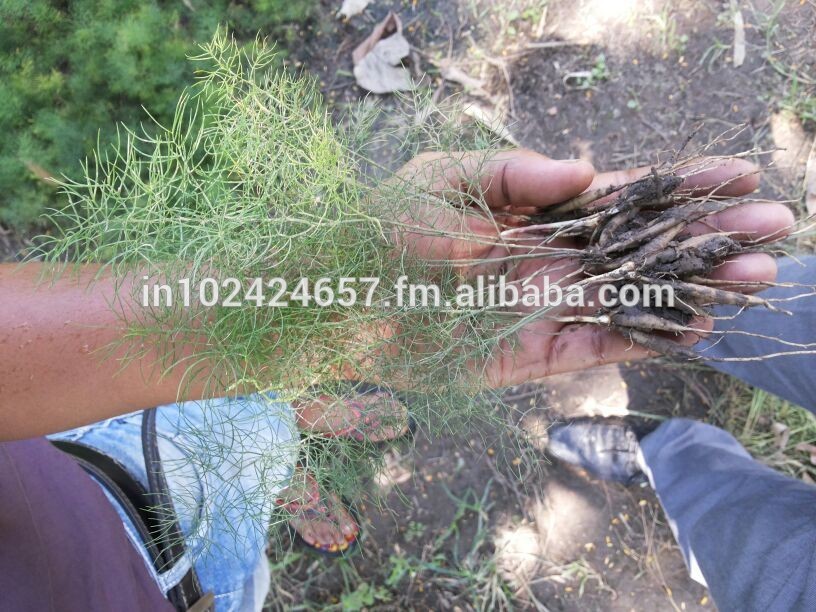
Shatavar - asparagus racemosus
Specifications
- Brand
- Nature Herbs
- Origin
- India
- Certifications
- ISO
- MOQ
- 10 Kilogram/Kilograms
- Packaging
- Seeds Packaging - 1 Kg/5 kg/ 10 Kg/ 25 Kg Plants - 5000 Pieces in Thermocol Box Roots - 30 Kg Per Bag
- Price Term
- EXW/EX-Work,FOB
- Payment Term
- T/T,L/C,Western Union
- Supply Ability
- 1,00,000 Kilogram/Kilograms per Year
- Delivery Time
- 15 Days
Shatavar - asparagus racemosus is a Plant Extract product. Key specs — Brand: Nature Herbs; Origin: India; Certifications: ISO; MOQ: 10 Kilogram/Kilograms.
Product Description
Botanical Description It belongs to the family Liliaceae and its related species are Asparagus adscendens, and Asparagus filicinus these are commonly found in the sub temterate and temperate regions in the Himalayan States. The other common species of Satavari in use are Asparagus.officinalis, Asparagus.gonoclaudus and Asparagus sarmentous etc.
Climate and soil The species grows under varied agro climatic conditions ranging from temperate to tropical hill ranges. The best altitude for Satavari cultivation is found 750 to 2000 feet above see level. Shatavri is a thorny climber which grows to the height of 180 cm. The plants are hardy vines found trailing on bushes along the dry hill slopes.
It is an ideal crop for raising as an intercrop plantations. The crop grows better in loamy soils with adequate drainage. The plants of Satavari are hardy and survive adverse conditions of drought and low temperatures like frost bite and hails. Satavari suits rainfed agriculture practice.
Being a shallow rooted crop it can also be grown in rocky soils where soil depth is low. Shatavari is therefore the most recommended crop for the hill farmers of Uttarakhand. Propagation It is propagated by root suckers or seeds. For commercial planting, root suckers are preferred.
Cultivation The land is prepared well by digging up to 15 cm depth. Application of high level organic manure is generally recommended for this crop. About 2-3 qntls of FYM(Farm Yard Manure) is recommended to incorporated one nali area for better output. To maintain line to line distance the ridges are prepared 60 cm apart for Satavari plantation.
Well developed root suckers should be prepared and planted at 60 cm distance from plant to plant. An average 500 plants are required for planting one nail land. Harvesting The plants flower during February- March leaving a mild frangnance in its surrounding. By the end of April, fruits can be seen with attractive red berries.
Each plant produces 16-20 elongated fleshy tubers which have sweet and mild flavor. The tubes are economic part and used either as fresh or after drying. The tubes come to maturity within 12-14 months after planting depending upon the soil and climatic conditions. Yield A single plant yields 300-400 gms of fresh roots.
On an average, 48 -56 qnts of fresh roots can be harvested in one acre land. After drying Satavari remains one tenth; therefore the roots yield an average is 4.8-5.6 q/acre as dry crop. The root is useful in curing dysentery, diabetes and tuberculosis. In general it helps to maintain the health by providing immunity to diseases.
The demand for Shatavri roots are on increase and destructive nature of harvesting the entire whole plant has resulted in shrinking of population. It is estimated that in India, more than 500 tonnes of Shatavri roots are required every year for medicinal preparations. But it is doubtful that such a huge quantity could be available under natural conditions.
The supply is rather erratic and inadequate due to the declining forest area. The species hold promising scope for cultivation on a commercial scale under selected environment. Uses Adaptogenic herb – Minimizes the negative effects of stress. Supports immune system health and sexual functions. Helps soothe PMS, menstrual, and menopausal imbalances.
Rich source of phyto-estrogens. Promotes healthy liver and kidney functions. Part of Use : Root